Showing posts with label memoir. Show all posts

Wednesday, June 3, 2026

Book Cover Junkie Interviews Memoir Author Marie McGaha

Marie McGaha is an award-winning writer whose work includes clean historical romances, Christian devotionals, and heartfelt children’s books. A storyteller at her core, she weaves faith, resilience, and gentle humor through every page she writes.

She makes her home in southeast Oklahoma, in the foothills of the Ouachita Mountains, where life is anything but quiet. Her days are shared with four spoiled dogs, a crippled rooster with more attitude than feathers, a noisy guinea who believes it runs the place, a couple of flighty hens, and a watchful roo who keeps an eye on everything that moves. This lively little farm—equal parts sanctuary and circus—provides endless inspiration, companionship, and the kind of grounding only God’s creation can offer.

Whether she’s crafting a tender love story, guiding readers through Scripture, or bringing the Bible to life for children through animal characters, Marie writes with a voice shaped by faith, loss, healing, and the stubborn hope that refuses to let go. Her work reflects the heart of a woman who has walked through fire and come out carrying stories worth telling.

You can also join her for daily devotionals on YouTube at @HeReignsChurch, where she shares encouragement, Scripture, and the steady reminder that hope is still alive. You can contact her by email: church.hereigns@gmail.com. 

Marie’s latest book is Your Ghost: A Memoir of Love, Loss and the Echoes That Remain.

Visit her blog at authormariemcgaha.blogspot.com. 

Connect with her on social media at:

╰┈➤ Facebook: www.facebook.com/AuthorMarieMcGaha

╰┈➤ LinkedIn: Linkedin.com/in/mariemcgaha 

Tell us about your book! What inspired you to write it?

My husband died in November 2021 and the past 4+ years have been the hardest of my life. I had 600 pages of rantings I’d written trying to cope with the pain, grief, and loss, so I edited them and my book was born.


How did you choose the title for your book? Did it come to you right away, before you started writing it, or did it come later?

Originally, I called it Your Ghost because I felt like a ghost haunting my own house. After a few edits, the subtitle came to me.

Tell us about the cover design process. Did you have a basic idea of what your book cover would be like? 

I knew I wanted my husband on the cover and as I looked through photos, I came to one that made sense. It was taken the winter of 2020, the last picture of when I was truly happy and everything was right with the world.

Who is your cover designer and how did you find him/her?

I designed this one.

What has been the readers’ response to your cover?

It’s been very positive and apparently, my husband is very appealing to women!

What tips would you give to authors who are looking for a cover designer?

My favorite cover artist is Val Muller. I’ve used her exceptional talent in the past and highly recommend her. She is also an author, so she gets how important the cover is to writers.

Anything else you’d like to say about your book?

Losing my husband is the worst thing that has ever happened to me. I will never “get over” him and no other man could hold a candle to him. He is the best man I’ve ever known.

Sunday, November 23, 2025

Book Cover Junkie Interviews Christian Memoir Author Johanna Frank

Johanna Frank is a Canadian author based in Southern Ontario, where she lives with her husband, and delights in time with her children and grandchildren. Her award-winning A Lifeline Fantasy Series includes The Gatekeeper’s Descendants (Readers’ Favorite 5-Star Medalist), Jophiel’s Secret (Winner of the 2023 General Market Suspense Fiction Award and the Christian Speculative Fiction Award), and Here Lyeth (finalist for The Word Guild’s 2025 Christian Speculative Award). 

In addition, Johanna has introduced a creative memoir, a deeply personal work that explores God’s abundant mystery and healing. 

Known for her lyrical, imaginative style rich in symbolism and spiritual depth, she invites readers into otherworldly adventures and real-life reflections that illuminate belonging, faith, and the unseen.

“Frank, one of Canada’s emerging authors in spiritual fantasy, walks a fine line between general fantasy and faith-based fiction. Her work aims to innovate and transcend traditional boundaries, catering to a hungry market of curious readers who don’t want to be preached to but are open to exploring spiritual themes through fantasy.” – Sheri Hoyte, Reader Views

Johanna's latest book is the powerful Christian nonfiction, The Voice I Couldn’t Ignore. Connect with her at Facebook, Goodreads, Instagram and BookBub. 

Tell us about your book! What inspired you to write it?

Thank you for this question. I included a Letter to Readers at the beginning of the novel to share more about its origins. In short, it took me well over a decade to piece together the unusual events that have shaped my life—many of which, I believe, reflect God’s abundant sense of mystery. Should you choose to


read the book (and I hope you do), the prologue draws on inherited knowledge of an ancestor’s trauma, while the main narrative—told in first person—reveals personal experiences of haunting visions, profound dreams, and deep loss. Ultimately, the story leads to an enduring sense of peace and an unwavering faith in life everlasting.

How did you choose the title for your book? Did it come to you right away, before you started writing it, or did it come later?

Great question given I struggled with this considerably once I finished the manuscript for The Voice I Couldn’t Ignore. The working title – The Spiritual Side of Grief - had cemented considerably so it was tough to smash it to bits once I’d realized it wasn’t quite a good fit any longer. Originally, I was wanting to simply get certain unique experiences on paper, suitably and only possibly, for sharing. Though the writing flowed more as a novel – a story – and I needed a title to reflect the story of experiences. That’s when I changed the title to The Open Window, then after considerable thought to The Voice I Couldn’t Ignore.

Tell us about the cover design process. Did you have a basic idea of what your book cover would be like?

I did actually. First, it needed to be considerably different from my previous three novels which are a different genre – a speculative fantasy for adults and young adults. Many authors change their pen name when writing in a different genre, I chose not to and for that reason, required a different look for The Voice I Couldn’t Ignore. In my head, I knew I wanted it to be clean, simple, profound, and with a white background. 

Who is your cover designer and how did you find him/her?

Google, of course! About five years ago, I came across a website whose cover designs instantly caught my eye. I was impressed by the creativity and professional quality of their work right from the start. Over the years, the team has expanded and taken on more clients—a clear reflection of their success. With that growth, their service has become a little slower and not quite as personal as it once was, but their design expertise remains outstanding and continues to deliver beautiful results.

What has been the readers’ response to your cover?

BookLife gave the cover an “A-” grade, so I was happy about that. However, after receiving a few queries such as – ‘but it ends well, right?’ – I’ve realized some readers may bypass this creative memoir, which reads like a novel by the way, perhaps because they are not confident in the faith component. While in reality, the novel is a strong testament of faith, one that survives a harsh storm.

What tips would you give to authors who are looking for a cover designer?

Review their prior work as well as their cost for producing a cover. Ensure they will provide two or three options and are willing to make adjustments once you’ve settled on an option. It is key that they ask for your input before design, input that is sufficient for them to get the ‘feel’ of your book – the feel you want your readers to have in order to pick it up.

Anything else you’d like to say about your book?

The biggest challenge was to take the heart and guts and experiences I’d kept secret and carried on my sleeve so-to-speak for many years and allow it to transition into a product per se. When writing, I’d decided to put my best foot forward, to have the story professionally edited and with a professional cover. Then I would make that final decision – to publish. And hence, I did publish.

Tuesday, January 18, 2022

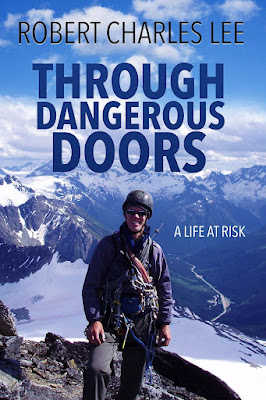
❀New MEMOIR Alert❀: Through Dangerous Doors by Robert Charles Lee


Title
: THROUGH DANGEROUS DOORS
Author: Robert Charles Lee
Publisher: Wido / E.L. Marker
Pages: 212
Genre: Memoir

In a life defined by risk, Robert Charles Lee experiences a poor and free-ranging childhood in the racist South of the 1960s. After his father dies, the family grows dysfunctional. As a result, teen-age Robert seeks sanity and solace by rock climbing solo and driving cars fast. He wins a scholarship and graduates from university, but still seeks to escape the South.

Moving to Alaska and the Western US, Robert works in a series of dangerous and brutal jobs. He meets and marries Linda, who enjoys climbing and skiing difficult mountains as much as he does. Simultaneously, Robert trains in the science of risk to become a respected professional risk scientist.

Robert shares his remarkable story as he guides the reader through a series of dangerous but rewarding doors, culminating in a vivid journey of adventure and risk.

Praise

“Through Dangerous Doors is an engaging and snappily written reflection on a life charted by risk. Like the dangerous mountains he eventually comes to climb, Lee’s need to be on the edge and in the flow guide him on a fascinating ascent up the American socio-economic pyramid, a challenging mountain in itself, and geographically from the lowland South to high country of the North. Small wonder that when Lee and his wife arrive in Calgary, Alberta to live for a decade they immerse themselves in what Lee wisely comes to realize is one of the most dangerous, yet spiritually rewarding mountain ranges in the world – the Canadian Rockies. Lee’s lifelong evaluation, and refinement of, the risk versus reward calculation is educational. And I love the way he calls poppycock when he sees it. Lee shares life lessons that were hard won and valuable to all.” – Barry Blanchard, UIAGM/IFMGA Mountain Guide, author of The Calling – A Life Rocked by Mountains, winner of the Boardman-Tasker Prize for Mountain Literature

“Much more than a book on mountaineering, Robert Charles Lee’s memoir delves deeply into the relationship between risk and reward, exploring the things we can control and those we can’t. His journey of self-discovery has resulted in a thoughtful meditation on the nature of adventure and what makes for a life well lived. Lee’s story will resonate with any readers who have experienced the incomparable satisfaction of challenging themselves while at the same time understanding the wisdom of respecting their limits.” –Scott Zesch, author of “The Captured,” winner of the TCU Texas Book Award

“This is a memoir like few others, in that the author is intent on beseeching his readers not to follow the example of his own life. The story he tells shows that this is very good advice indeed, but nevertheless his tale of improbable escapes from one looming disaster after another is both instructive and entertaining.” – William Leiss, Queen’s University, author of: In the Chamber of Risks: Understanding Risk Controversies, Mad Cows and Mother’s Milk: The Perils of Poor Risk Communication, and Risk and Responsibility

“In this engaging and very readable memoir, Robert Lee reminds us that life IS risk. Humans only continue to learn, grow and evolve through facing and conquering risks. Whether the risks are involuntary or voluntary, Lee aptly emphasizes that the key to survival, or even thriving, is how we choose to understand and manage those risks. While Lee’s recounting of his numerous climbing risk adventures reflects his personal approach to risk and risk management, his stories will resonate strongly with anyone who seeks the challenge and stimulation of being a ‘risk taker’. This book will ultimately make you examine more closely your own life in relation to the risks you choose or don’t choose to undertake.” – Cindy Jardine, University of the Fraser Valley, world record skydiver 

“As autobiographies like Educated and The Glass Castle have taught us, growing up through hardship can be remarkably annealing. So too in this disarmingly honest memoir, where Lee relates his annealed response. He adeptly strings us along his extraordinary lifepath from childhood until retirement using an idiosyncratic lens: A meditation on risk serves as Lee’s through-line, one informed by his career in risk analysis. Sit and enjoy the windfall of a raconteur relaying how he and his fellow travelers have encountered and responded to risks. Many encounters, like his vivid recounts of ice and mountain climbing, are quite intense. We get a taste of life as a forester, psychedelic-explorer, musician, academic, blessed husband and alpinist.  Some entrancing events, nicely infused with a humble `stock-taking’ of the cards that were dealt, and the choices made. An extraordinary story that resonates beyond risk.” – Kevin Brand, University of Ottawa

““Life is either a daring adventure or nothing at all” wrote Helen Keller in her passageway focused book The Open Door. Metaphorical passageways hurtle us in and out of the risky exploits of Mr. Lee in Through Dangerous Doors. Climbing on a glacier or rappelling down a mountain, Lee shows us the thrill of daring adventure. But risk is not the goal, it is the price paid for adventure – and sometimes that price is too high. Lee helps us see that managing risk, sometimes with tools or technology and sometimes by knowing when to say no, is the key to continuing to be able to pass through new doors.” –  George Gray, George Washington University, co-author of Risk: A Practical Guide for Deciding What’s Really Safe and What’s Really Dangerous in the World Around You

Book Excerpt:

I’m a tired, cold, wet sponge. My co-workers are losers, addicts, and criminals who work hard, nonetheless. Most are always stoned on something. I’m encased in rubber from head to toe, with wool underneath. The smell of wet vegetation permeates everything. It’s always raining, and never warm. I’m in virgin wilderness, moss-covered primordial forest never seen by humans. The streams are choked with salmon during spawning. Some days, I see a dozen or so nine-foot-plus Alaskan brown bears, thousand-pound monsters who have never seen humans and who’re afraid of absolutely nothing. They can kill with one swipe of their eight-inch wide paws, armed with claws like curved daggers. I carry a bolt-action rifle chambered for .375 H&H Magnum 300 grain bullets for bear defense. I’m reluctant, but I slosh through the door to woods work.

***

Upon arrival in Ketchikan, I was told no logging jobs were available. Many people who work for or with the US Forest Service refer to the agency as the Forest Circus. The logger I spoke to explained he hadn’t won an expected Circus contract, and he’d had to lay off workers. This put me in a bit of a sticky wicket, as I had no return ticket and little money. If this had happened later in life when I was more confident, I would’ve wrested a return ticket out of the man. My life, however, would’ve proceeded in a completely different direction, so I’m glad I didn’t wrest anything.

The lack of logging jobs was actually a fortunate turn, as logging is particularly dangerous. I flew back to Juneau, where there were other jobs. I worked for a few months for minimum wage in a Forest Circus visitor’s center at Mendenhall Glacier, a stop for busloads of well-heeled cruise ship tourists. I couldn’t afford rent. I’d expected to live in a logging camp, but I was able to use temporary government housing in Juneau.

The only people who lived in Juneau seemed to be those who didn’t fit in anywhere else. Fishermen and loggers came into town and blew their entire paychecks drinking and whoring. The town smelled like fishy moss, or mossy fish. Bald eagles dumpster-dove, competing with the ravens. It felt like time travel back to a wilder era.

Tiring of cleaning up tourist trash and actual crap, I capitalized on a forestry course I took at State, and switched to a surveying job. Surveying in those conditions wasn’t any more pleasant than logging, but at least the work itself was easier and a bit safer. Survey crews laid out the boundaries of future logging areas in virgin wilderness with compasses and chains (long tape measures). This was way before Global Positioning Systems (GPS). Once logged, the areas are called clear-cuts. All marketable trees are felled, then skidded down to the ocean and floated to mills. Surveying was my introduction to woods work.

The crew flew from town to the field camps in small float planes, flown by crazy-ass bush pilots whose idea of fun was diving toward and buzzing whales, mere feet above the waves. The camps looked like sets from the Robert Altman movie M.A.S.H. Miserable workers living in miserable canvas tents in miserable, sopping wet forest. We suffered from gastrointestinal illness much of the time, due to fecal contamination or camp crud. It was difficult to obtain fresh food except for fish.

We flew to the survey line most days in Vietnam-era Bell Huey helicopters, piloted by freaky Vietnam vets who were usually drunk or stoned. Decapitation during loading was a concern for tall people like me. Crosswinds off the glaciers above the forest zone pummeled the aircraft. The helicopters pitched and yawed wildly once they took off and rose above the treetops. None of us ate breakfast before going to work. The pilots yelled at us in our headsets to shut up so they could concentrate in such conditions.

The pilots often landed in muskeg, as these were the only open areas. Few things were more unpleasant than stepping out into a bog and sinking down, OTT or over-the-top of our knee-high rubber boots, into the cold peaty water. Then we’d have to take off our helmets and reeking, fireproof onesies with the rotor screaming in our ears.

I was concerned about some of the workers carrying rifles. Many had never hunted or even fired a weapon, yet the government handed them powerful firearms used to hunt the largest game on Earth. Training for shooting a charging bear, dodging-and-weaving through thick forest, consisted of the crew chief setting up a stationary cardboard box fifty feet away and instructing the shooter to fire away. Fortunately, nobody on my crew ever shot a bear or human. Capsaicin bear spray, a much more effective defensive weapon, had yet to be invented.

Much of the work involved just making it through the day without getting killed by ursine monsters or other means, or going rain-insane. Everybody had different coping mechanisms. Being in a stoned state made the work less pleasant for me, as the days seemed much too long, and I tended to focus on my physical misery. I’d wait until I was in the tent at night to light up. I felt overwhelming relief lying stoned next to a glowing wood stove in a dry tent.

Working in such unpleasant surroundings, with many unpleasant people, required a simultaneous mix of inward retreat and congeniality. I’d done plenty of hard work before this, but not at such a high level of wretchedness.

There were, however, occasional moments of transcendence. As long as I accepted the suffering, there were fine rewards: Spawning female salmon leaping over dams of their dead and rotting sisters who didn’t make it. A gigantic brownie, sitting on his haunches eating caviar from the gravid belly of a salmon he’d just snagged and ripped open with a single claw. Impromptu sight-seeing tours over pristine fjords, provided by the heli pilots when they had extra fuel. Keeping my shit together while hiking, camping, and tripping on psychedelics on my days off; lever-action Guide Gun on my pack or next to my sleeping bag, loaded for big bear. Hikes along wild beaches choked with giant driftwood, making way for the occasional lumbering bear. Glorious views of the Juneau Icefield and the coastline, achieved by bushwhacking (trail-less hiking through bush, which whacks the bushwhacker) and scrambling (easy, un-roped rock climbing) up unclimbed and unnamed peaks on rare, precipitation-free off days. My first aurora borealis, witnessed on a rare clear night from the deck of a ferry plying between islands, miles from any shore lights. It was astounding. A yellow-green corona originating from overhead like divine rays of love, an LSD trip without drugs.


About the Author


Robert Charles Lee
 is a retired risk scientist with over twenty-five years of academic and applied risk analysis, decision analysis, and risk management experience in a wide variety of contexts. He has authored over one hundred peer-reviewed scientific works, as well as over one hundred technical reports for industry and government agencies. Prior to the professional risk work he worked in laboratories a bit, but otherwise was a manual laborer until he reckoned that he could use his brain for a living.

Robert has a BS in Botany, a BS in Science Education, an MS in Environmental Health, and a Certificate in Integrated Business Administration. He is ABD (all but dissertation) in a Toxicology PhD program. He is an ordained Minister and has an honorary Doctorate of Metaphysics from the Universal Life Church and is a Member of the Nova Scotia L’Ordre du Bon Temps, or Order of the Good Time.

He was born in North Carolina and lived there for over twenty years, but has since lived in Alaska, Oregon, Washington, and Alberta. He was also homeless for a time while a laborer in the Western United States. He currently resides in Colorado.

Robert and his wife Linda have climbed hundreds of technical and non-technical mountain, rock, ice, and canyon routes, hiked thousands of miles in several countries, and skied many miles of vertical feet at resorts and in the backcountry.

Robert is an avid amateur photographer, largely of outdoor subjects. He is a musician who plays hand, stick, and mallet percussion, and who can sing, but rarely does for unclear reasons. He is an amateur sound engineer and producer and has recorded more than a thousand written and improvisational instrumental pieces with other musicians to date. He was trying to learn to relax in retirement, but then he discovered non-technical writing. He has written a memoir and a poetry collection and is working on short stories.

Through Dangerous Doors is his latest book.

Visit his website at https://robertcharleslee.com or follow him on Goodreads.

Thursday, April 1, 2021

New Memoir Spotlight: 'In My Next Life I'll Get It Right' by Rosemary Mild


Acclaimed novelist Rosemary Mild pulls back the curtain on life, love, loss, and everything in between in her new book, In My Next Life I’ll Get It Right.  In this charming, entertaining, and heartfelt collection, Mild dances to her own captivating tune. With a keen eye, wicked wit, and sparkling delivery, she produces a collection of essays ranging from the hilarious to the serious, from the practical to the irreverent. Clever, pitch-perfect, and polished, Mild’s conversational tales are destined to strike a chord with readers.

Mild writes with candor, compassion, and honesty in a voice that brims with humor and wisdom. Her essays run the gamut from gritty observations on everyday life to laughing at her own wishful thinking tempered with tough reality. In My Next Life I'll Get It Right has it all.

No subject escapes the pen of Rosemary Mild—wife, mother, grandmother, great-grandmother. Readers will delight in her Hawaii adventures; “Senior Decade”; brief encounters with the famous; medical mishaps; and her rocky road from blind dates to lasting love. Join her as she takes on sailing, skating, Jazzercise, football, marathons, and more—and come along as Mild lays bare a mother’s heart-wrenching loss. A collection that is at once timeless and timely, In My Next Life I’ll Get It Right is utterly irresistible.

Find out more about the book. 


ABOUT THE AUTHOR

Rosemary Mild is an award-winning essayist whose work has appeared in the Washington Post, Baltimore Sun, Chess Life, and countless other outlets. When not dreaming up outrageous essay ideas, Rosemary Mild and her husband, Larry, wallow in crimes and clues that include their popular Paco and Molly Mysteries; Dan and Rivka Sherman Mysteries; two Hawaii suspense/thrillers; and three gripping story collections. They have two stories in the 2021 anthology Kissing Frogs and Other Quirky Tales. Rosemary has also authored two memoirs: Love! Laugh! Panic! Life with My Mother; and Miriam's World—and Mine, in memory of the beloved daughter they lost in the terrorist bombing of Pan Am 103 over Lockerbie, Scotland. Check out her website. 


READ AN EXCERPT

The Hazards of a Grandma’s Bragging Rights

In June, 2004 two stone lions welcomed Larry and me as we mounted the steps to the Corcoran Gallery of Art in Washington, D.C. We’d come for the opening of the National Scholastic Arts and Writers Exhibition, sponsored by the Alliance for Young Artists & Writers, Inc. Each state runs its own annual regional competition. The 1,200 honorees at the Corcoran were chosen from the 250,000 regional winners. We had a personal stake in this show. One of the winners was a sculpture titled The Kelpie, created by our granddaughter Alena Lau, a sophomore at Roosevelt High School in Honolulu. 
In the first exhibit room we found the chest-high glass case containing small ceramics. The Kelpie was on the far right. It depicted a young girl crouching beside a rippling pond, with a horse up to its neck in the blue-green water. 
“This is our granddaughter’s piece,” I announced proudly to the parade of visitors. They all stopped to look. I grandly interpreted it, paraphrasing the definition from Merriam-Webster’s Collegiate Dictionary. “The kelpie—the little girl—is a water sprite of Scottish folklore who delights in the drowning of wayfarers.” 
Visitors seemed to appreciate my explanation, because none of the artworks bore one. Many visitors took pictures. Speaking of pictures, I had called the Corcoran in advance to ask whether they allowed cameras. “No, only in the reception area.” Being obsessively obedient since I was a child, I didn’t bring mine. We got there and almost every visitor had one! A kindly looking woman approached and I whipped up my courage: 
“If you’d be willing to take a couple pictures of our granddaughter’s sculpture and send them to us, we’ll send you an autographed copy of our mystery novel.” 
“I love mysteries,” she said, “but I’ll go you one better. My sister is here with an extra throw-away camera and we’ll give it to you.” She refused to let us pay for it. What a lovely lady. I took umpteen pictures, and we sent her a book.
I held court at the Corcoran for two hours. And for the entire year after, I carried pictures in my purse, doing show-and-tell to all family and friends.  
Until Alena’s mom, my stepdaughter, heard me. We were all attending a large holiday party, when Jackie said in a stern voice that every guest could hear. “No, Rosemary, you’ve got it wrong! The horse is the kelpie!” 
What? Oh, no! Here’s what happened. I had indeed looked up “kelpie” in the dictionary, but I neglected to also read the origin of the word in brackets—from the Scottish-Gaelic “heifer or colt.” (You’ve heard the Latin phrase Mea culpa, meaning “My fault.” Well, Mea kelpie!) 
Since then I’ve promised Alena I’ll always write down her own interpretations of her artworks. No improvising. Fortunately, my humiliating goof had no lasting impact. The sponsors of the competition bought The Kelpie for their offices in New York. 


Find out more about the book. 

Monday, July 13, 2020

On the Spotlight: 'Stepping Stones: A Memoir of Addiction, Loss, and Transformation,' by Marilea C. Rabasa


Marilea C. Rabasa is a retired high school teacher who moved west from Virginia eleven years ago. Before that, she traveled around the world with her former husband in the Foreign Service. She has been published in a variety of publications. Writing as Maggie C. Romero, Rabasa won the International Book Award, was named a finalist in both the New Mexico-Arizona Book Awards and the USA Best Book Awards, and earned an honorable mention in The Great Southwest Book Festival, for her 2014 release, A Mother’s Story: Angie Doesn’t Live Here Anymore.  She lived in Albuquerque, New Mexico, for a number of years and now resides in Camano Island, Washington. Visit her online at:  www.recoveryofthespirit.com 


About the Book

Addiction is a stealth predator. Unrecognized, it will grow and flourish. Unchecked, it destroys.

Marilea grew up in post-WWII Massachusetts in a family that lived comfortably and offered her every advantage. But there were closely guarded family secrets. Alcoholism reached back through several generations, and it was not openly discussed. Shame and stigma perpetuated the silence. Marilea became part of this ongoing tragedy.

Her story opens with the death of her mother. Though not an alcoholic, it is her inability to cope with the dysfunction in her life that sets her daughter up for a multitude of problems.

We follow Marilea from an unhappy childhood, to her life overseas in the diplomatic service, to now, living on an island in Puget Sound. What happens in the intervening years is a compelling tale of travel, motherhood, addiction, and heartbreaking loss. The constant thread throughout this story is the many faces and forms of addiction, stalking her like an obsessed lover, and with similar rewards. What, if anything, will free her of the masks she has worn all her life?

Read Marilea’s inspiring recovery story and learn how she wrestles with the demons that have plagued her.


//////////////////////////////////////////////////

EXCERPT: 
Straws  

Our first year in Greece, Angel and I took the kids swimming on Crete, went skiing at Mount Parnassus, and made the trip up to Nea Makri Naval Base often to buy things in the commissary. There were four bases in Greece that we used for our shopping: the large Hellenikon Air Base, just south of Athens; the small one north of us on the island of Evia; and two more bases on Crete, one in Souda Bay and another in Iraklion. The American presence in that country was considerable and was becoming more and more controversial.
In a letter to my mother, dated 11/24/87, I wrote:

Dear Mom,
Angel has been on the front page of the news here. He has been on the negotiating team for the American bases here. He was in London and Stuttgart for a week, meeting Ambassador Flanagan, and brought him here to begin negotiations with the Greeks. The whole process will be on and off for a couple of years. I’m sure Angel will be promoted as a result of this. Now that his picture was on the front page, we will be hotly pursued by the Greeks. Security has to be increased now. Angel and I have to switch cars occasionally.

I took more of an interest in the political controversy with the unfolding of a tragedy in my own neighborhood—the place where my children had roamed around freely, walking their dog, playing ball, and feeling entirely safe.
As that first school year ended, our family was busy squabbling over what our summer plans would be. But all the plans came to a sudden halt on June 28 with the assassination of our neighbor Bill Nordeen.
 This was too close.
A security detail drove Angel to work daily following the murder, and I shook with fear for months, thinking of my children walking to the school bus every day. Pedro Joaquín Chamorro had been murdered in Nicaragua only ten years before. Up until that second murder, I had enjoyed a devil-may-care attitude about my life. Our adventures in the Foreign Service had been enriching and stimulating—but also dangerous. Even with the kids, I eventually went along, firmly attached to my husband and the sexiness he found from living on the edge.
Angel was attracted to danger; it’s true. It’s not accidental that he became a terrorism expert at the Rand Corporation following his tenure in the Foreign Service. And I think when we were first married it felt exhilarating, watching the fomenting of a left-wing revolution in Nicaragua. I was younger then, and I didn’t have a growing family to consider.
I didn’t find the edge exhilarating anymore.
My husband was relaxed and unstressed about the work challenges he was dealing with and the threats to Americans. But it was a difficult time for me. Our house had become an armed camp with policemen guarding our comings and goings.
            “Angel, why is the security detail here all the time? It’s scaring the children,” I asked him as I watched our kids running to catch the bus. My hands had begun to shake—my reaction to fear that went back to my childhood. “I don’t want to see police cars here all the time. Please, can’t you tell them to meet you at the corner?”
            “Stop it, Marilea,” he snapped, brushing me off, “do you want to end up a widow like your mother?”
I woke up one night while Angel was away on embassy business, sweating and shaking, with the image of heads on stakes up and down the highway to the base at Nea Makri. I doubled the number of cigarettes I’d been smoking in an effort to relieve my stress.
The children were in school all day and had many after-school activities to occupy themselves. But I couldn’t sleep much at night, continually waking with old “They’re coming to get me” nightmares from my 1973 breakdown so many years before. But there in Greece it wasn’t drug-induced paranoia: those fears were real. The terrorist organization under suspicion, November 17,  had promised to kill more American diplomats if the United States refused to remove its bases from Greece.
The bomb that blew up near our house that day was still exploding in me.
Every time I saw Angel’s security guard pick him up I wondered if he’d be coming home that night.
            Bill Nordeen had also been in an armor-plated vehicle, and it did nothing to protect him.

Thursday, February 1, 2018

Meet Joseph Davida, Author of TRAVELING HIGH AND TRIPPING HARD

After a near death experience at age fifteen, Joseph Davida left his parents’ home and moved into Manhattan. Too young to get a “real” job, he started up what became one of the biggest weed delivery services in New York to support himself while he pursued his career as a musician and songwriter. For years he worked with some of the best musicians in the world, until a nervous breakdown brought his time in the music industry to an end. During this time he traveled the world before finally settling in Nashville, where he had two beautiful daughters and started a successful chain of retail stores. He now concentrates on being a good father, and actively plans for the coming revolution…while also working to get his many stories onto the page. He's here today to chat about his book TRAVELING HIGH AND TRIPPING HARD. Visit his website at www.josephdavida.com.
Interview:
Tell us about your book! What is it about and what inspired you to write it?
Well, it was a combination of things. Probably the biggest inspiration came from the books I read as an early teenager, before I had a chance to get out and see the world on my own. For better or for worse, it started with “On the Road” when I was thirteen. That quickly led me to Burroughs, who immediately became a huge influence. After I had done some serious traveling, I decided I wanted to share some of my own my stories.
Tell us about your publishing process. What was it like? Did you go indie or the traditional way?
I had too little patience to try and take the traditional publishing route. After dealing with some music industry people when I was younger, I figured I’d be better off trying to do things on my own terms. The idea of sending out a manuscript to agents and publishers sounded like a nightmare.

How did you choose the title for your book? Did it come to you right away, before you started writing it, or did it come later?
I had bits and pieces of stories I had written down while traveling, so the title didn’t come until much later. I knew I had to have some reference to the words traveling and tripping, and I just played around with them until something sounded right, and seemed to capture the essence of the book. I’m not sure “trip” is technically a double entendre, but certain readers will definitely get the double meaning.
Tell us about the cover design process. Did you have a basic idea of what your book cover would be like?
Yes, I had a good idea of what I wanted the cover to look like. I worked as a tattoo artist for a few years ages ago, but never considered myself much of an “artist”. That being said, I have a decent eye…so I sketched out a few ideas of what I was looking for.
Who is your cover designer and how did you find him/her?
I got online, and looked at ton of different artists’ work. Finally, I found a guy named Travis Gillan, and as soon as I saw what he was doing, I knew I had to hire him.
How was your experience working with the designer?
Amazing. At first I told him kinda what I was looking for, but I wanted to see what he came up with by himself. When he sent over his first sketch, it was almost EXACTLY what I had envisioned, except a million times better. I showed him the rough drawing I had done, just to show him how well he nailed it, and he got to work on the final cover.
What has been the readers’ response to your cover?
Everyone who has seen it so far has loved it. You can’t deny the talent of this guy. I loved what he came up with so much, that I decided I had to have him do a few illustrations for the inside of the book as well. His line work is incredible, and the way he uses colors is very specific. His style is so distinct, I’m just glad I found him and had a chance to work with him while I could still afford him. Expect to see his work all over the place in the future.
What tips would you give to authors who are looking for a cover designer?
Spend some money, and don’t chince out. Your cover is the first thing people are going to see before they ever even decide if it’s worth reading a word of it. There are a ton of great artists out there, a lot of them desperate for work. Look around until you find someone who jumps out and grabs your attention…then hire them.
Anything else you’d like to say about your book?
Yes, go buy it. It is available on January 30th, at fine online retailers everywhere! I hear Jeff Bezos needs the money…